Stop Guessing, Start Targeting: The Power of Data Consolidation
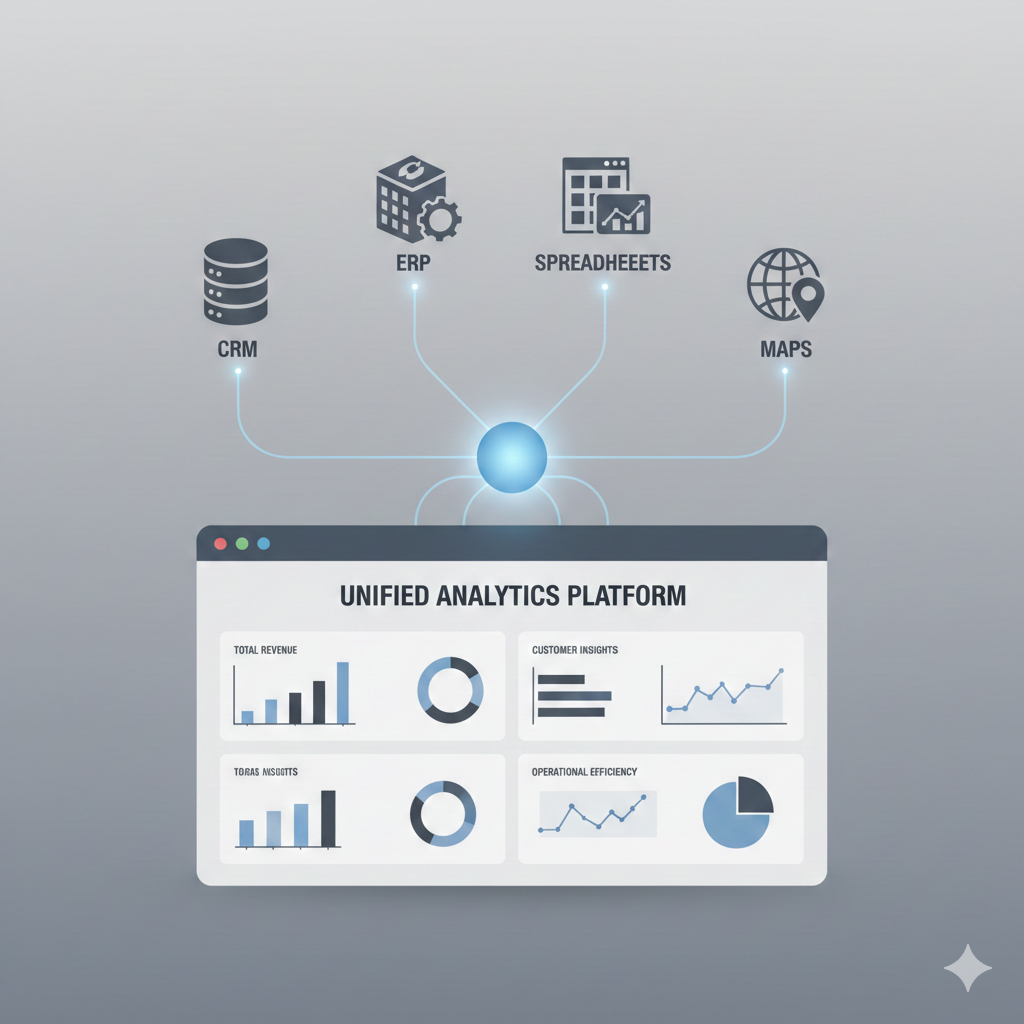
How unified data transforms sales, marketing, and operational decision-making
Introduction: Why Guesswork Is Costing You Growth
Many organizations still make critical sales and marketing decisions based on fragmented data, gut instinct, or outdated reports. CRM data lives in one system. ERP data lives in another. Marketing metrics, customer service insights, territory assignments, and pricing history sit in disconnected silos.
The result?
Sales teams chase the wrong accounts
Marketing targets the wrong audiences
Leaders struggle to trust their own dashboards
In a competitive B2B landscape especially in distribution, manufacturing, and wholesale guessing is no longer sustainable.
This is where data consolidation changes everything.
When done correctly, data consolidation turns scattered information into a single, reliable source of truth, enabling organizations to stop reacting and start targeting precisely, confidently, and profitably.
What Is Data Consolidation (and What It Is Not)
Data consolidation is the process of bringing data from multiple systems CRM, ERP, accounting software, spreadsheets, third-party tools into one unified, structured environment.
It is not:
Just building more reports
Copying spreadsheets into another spreadsheet
Creating dashboards without fixing underlying data issues
True data consolidation focuses on:
Data accuracy and consistency
Standardized definitions (customers, territories, revenue, margins)
Cross-system visibility
Actionable insights, not just charts
When consolidation is done right, decision-makers stop asking “Which number is correct?” and start asking “What should we do next?”
The Real Cost of Disconnected Data
Before looking at the benefits, it’s important to understand what fragmented data is quietly costing your business.
1. Missed Revenue Opportunities
Sales teams often:
Call on low-value or inactive accounts
Overlook high-potential customers
Fail to recognize buying patterns
Without consolidated customer and transaction data, identifying true opportunities becomes nearly impossible.
2. Inefficient Territory and Account Coverage
Territories designed without consolidated data often result in:
Overlapping sales coverage
Uneven workloads
Under-served regions
This directly impacts sales productivity and morale.
3. Poor Forecasting and Planning
When historical sales, pricing, inventory, and customer behavior live in separate systems, forecasting becomes unreliable leading to:
Overstocking or stockouts
Missed demand signals
Reactive decision-making
4. Low Confidence in Data
When leadership sees conflicting numbers from different reports, trust erodes. Teams revert to intuition instead of insight, slowing alignment and execution.
How Data Consolidation Powers Smarter Targeting
Once data is unified, businesses unlock the ability to target with precision instead of assumptions.
1. Clear Customer Segmentation
With consolidated data, you can segment customers based on:
Revenue and margin contribution
Purchase frequency and recency
Product mix
Geographic behavior
Growth potential
This allows sales and marketing teams to focus their energy where it matters most.
2. High-Value Account Identification
Not all customers are created equal.
Unified data helps identify:
Top-tier accounts worth protecting
Under-penetrated accounts with growth upside
Accounts at risk of churn
Instead of blanket outreach, teams can tailor messaging, pricing strategies, and service levels based on real insights.
3. Territory Optimization Based on Reality, Not Assumptions
When sales territories are built on consolidated data customer density, revenue distribution, drive-time analysis, and historical performance they become:
Fairer
More balanced
More profitable
Sales reps spend less time driving and more time selling. Managers gain visibility into coverage gaps and performance issues.
4. Better Alignment Between Sales, Marketing, and Operations
One of the biggest benefits of data consolidation is organizational alignment.
When all teams work from the same dataset:
Marketing targets the right industries and regions
Sales focuses on the most promising accounts
Operations plans inventory and logistics more accurately
This alignment reduces friction and increases execution speed.
Turning Data Into Action: From Insight to Execution
Data consolidation alone is not enough. The real value comes from how the data is used.
At Intuitico, we focus on transforming consolidated data into:
Practical dashboards
Clear performance metrics
Scenario analysis for leadership
Actionable recommendations for sales and operations teams
The goal is not more data it’s better decisions.
Common Challenges (and How to Overcome Them)
Challenge 1: Inconsistent Data Across Systems
Solution: Standardized data definitions and automated data validation.
Challenge 2: Resistance to Change
Solution: Simple, intuitive dashboards that answer real business questions.
Challenge 3: Too Much Data, Not Enough Insight
Solution: Focus on KPIs that drive revenue, efficiency, and growth.
Why Data Consolidation Is a Competitive Advantage
Organizations that invest in data consolidation gain:
Faster decision-making
Higher sales productivity
Better customer experiences
Stronger leadership confidence
In markets where margins are tight and competition is intense, this advantage compounds quickly.
Stop Guessing. Start Targeting.
If your organization is still relying on fragmented data, intuition, or disconnected reports, you’re leaving growth on the table.
Data consolidation is not a technology project it’s a business strategy.
At Intuitico, we help organizations consolidate, analyze, and activate their data to drive smarter targeting, better territory design, and stronger performance across sales and operations.
Visit our website: https://www.intuitico.io
Have questions? Email us directly at “will.chen@intuitio.io“ we’d love to learn more about your challenges.
For a free 30-minute consultation, you can book a meeting using this link:
https://calendly.com/will-chen-intuitico/30min
