The Role of Product Data Enrichment in Driving Online Sales for Distributors
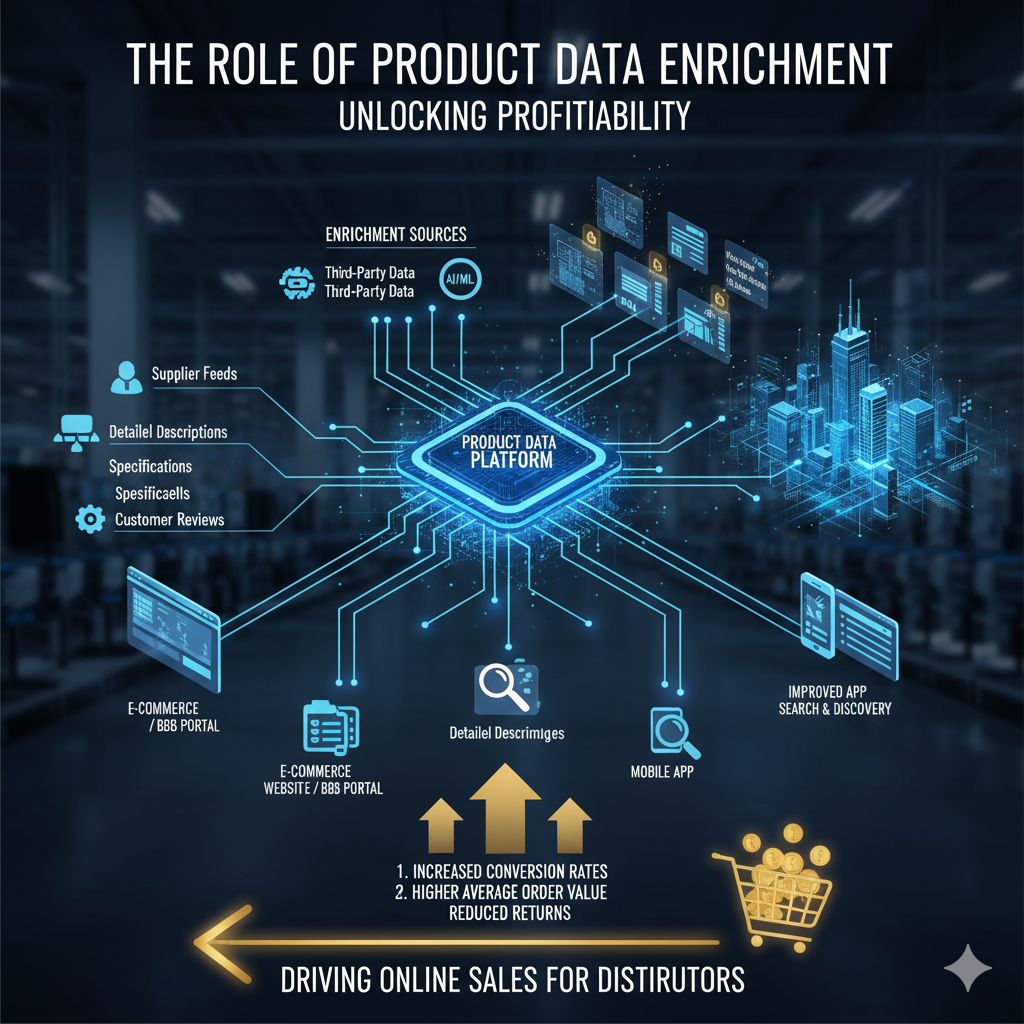
In today’s digital-first marketplace, distributors face intense competition—not just on price, but on how effectively they present their products online. Customers no longer make decisions based solely on what’s in stock. They rely heavily on accurate, detailed, and engaging product information to compare options, validate specifications, and build confidence before placing an order.
This shift has pushed product data enrichment from a “nice-to-have” to a core revenue driver. When well executed, enriched product data boosts rankings on search engines, improves on-page conversions, lowers return rates, and ultimately drives repeat business.
This blog explores why product data enrichment is essential for modern distributors, how it directly fuels online sales performance, and what steps companies can take to implement it effectively.
What Is Product Data Enrichment?
Product data enrichment is the process of enhancing basic product information with richer, more complete, and more compelling details. It includes:
Accurate specifications and attributes
High-quality images and videos
SEO-optimised product titles and descriptions
Standardised categorisation and taxonomy
Safety documents, manuals, and compatibility information
Cross-sell and upsell recommendations
Localization and unit conversions
For distributors managing thousands-or even millions- of SKUs from multiple manufacturers, enrichment ensures every product listing is complete, consistent, and ready for digital selling.
Why Distributors Struggle With Product Data
Unlike retail brands that produce their own content, distributors must consolidate data from various suppliers, each with different formats, quality, and levels of completeness. Challenges often include:
Missing technical attributes
Inconsistent terminology
Outdated or conflicting information
Poor image quality
Non-standardized product categories
Lack of digital-ready descriptions
These issues lead to confused customers, low organic visibility, abandoned carts, and unnecessary support tickets.
How Product Data Enrichment Drives Online Sales
1. Improved Search Engine Visibility (SEO Advantage)
Google ranks pages based on relevance, authority, and user experience. Rich product data helps distributors:
Rank for long-tail, high-intent search terms
Appear in Google Shopping, rich snippets, and image results
Reduce bounce rates with useful, detailed content
Build topical authority across categories
The more enriched your data, the more signals Google receives that your site is trustworthy and authoritative.
2. Higher Conversion Rates
Customers are far more likely to purchase when they can find:
Complete specifications
Clear dimensions and compatibility markers
High-quality visual media
Use-case explanations
Customer reviews or usage context
Enriched product pages reduce friction and uncertainty key reasons buyers walk away.
3. Reduced Returns and Support Load
Incomplete or unclear product data often leads to incorrect purchases. By providing accurate details upfront, distributors cut down on:
Wrong item returns
“Does this fit my application?” customer inquiries
Post-purchase dissatisfaction
Every reduction in return volume translates to cost savings and increased margins.
4. Enhanced Cross-Sell and Upsell Opportunities
With properly structured data, distributors can recommend:
Complementary items
Replacement parts
Higher-value alternatives
Frequently bought-together options
This not only increases average order value (AOV) but also positions the distributor as a trusted resource.
5. Better Customer Experience Across Channels
Enriched product data ensures consistency across:
E-commerce websites
ERP systems
Mobile apps
Marketplace listings
Sales enablement tools
Distributor or dealer portals
Customers expect seamless omnichannel interactions—data enrichment is the backbone that makes it possible.
Practical Steps to Implement Product Data Enrichment
1. Centralise Your Data (PIM or DDX System)
A central hub allows you to manage, enrich, standardize, and publish product data across multiple channels.
2. Standardise Taxonomy & Attributes
Create a uniform structure so every product category follows defined attributes and naming conventions.
3. Fill Gaps with AI-Assisted Enrichment
Tools like Intuitico can automate:
Attribute extraction
SEO-optimised description generation
Unit conversions
Deduplication
Manufacturer data normalisation
This makes large-scale enrichment achievable and affordable.
4. Conduct Regular Data Audits
Outdated or inconsistent data affects SEO and buyer trust. Quarterly reviews are ideal.
5. Optimise for SEO at the Product Level
Use keyword research to enrich:
Titles
Descriptions
Metadata
Alt-text for images
A product page can rank just as well as an article if optimized correctly.
Why Data-Driven Distributors Are Winning
Distributors embracing data enrichment outperform their competitors through:
Stronger digital presence
Faster product discovery
Higher e-commerce revenue
Greater customer satisfaction
Better reporting and analytics
In an industry rapidly shifting toward digital procurement, enriched product data becomes a strategic asset, not just a technical task.
Conclusion: Enriched Product Data = More Revenue + Stronger Customer Trust
As distributor e-commerce continues to grow, enriched product data is no longer optional- it’s a direct lever for sales growth, operational efficiency, and digital competitiveness.
Investing in high-quality product data today means capturing more market share tomorrow.
If you're looking to improve your product data, optimize your SEO footprint, and increase your online sales, Intuitico can help.
Visit our website: https://intuitico.io
Email us with questions or project inquiries: “will.chen@intuitico.io”
For a free 30-minute consultation, book here:
”https://calendly.com/will-chen-intuitico/30min”
Let’s elevate your product data - so your customers choose you every time.
