Best Enrichment Data Sources for Distributors in 2025
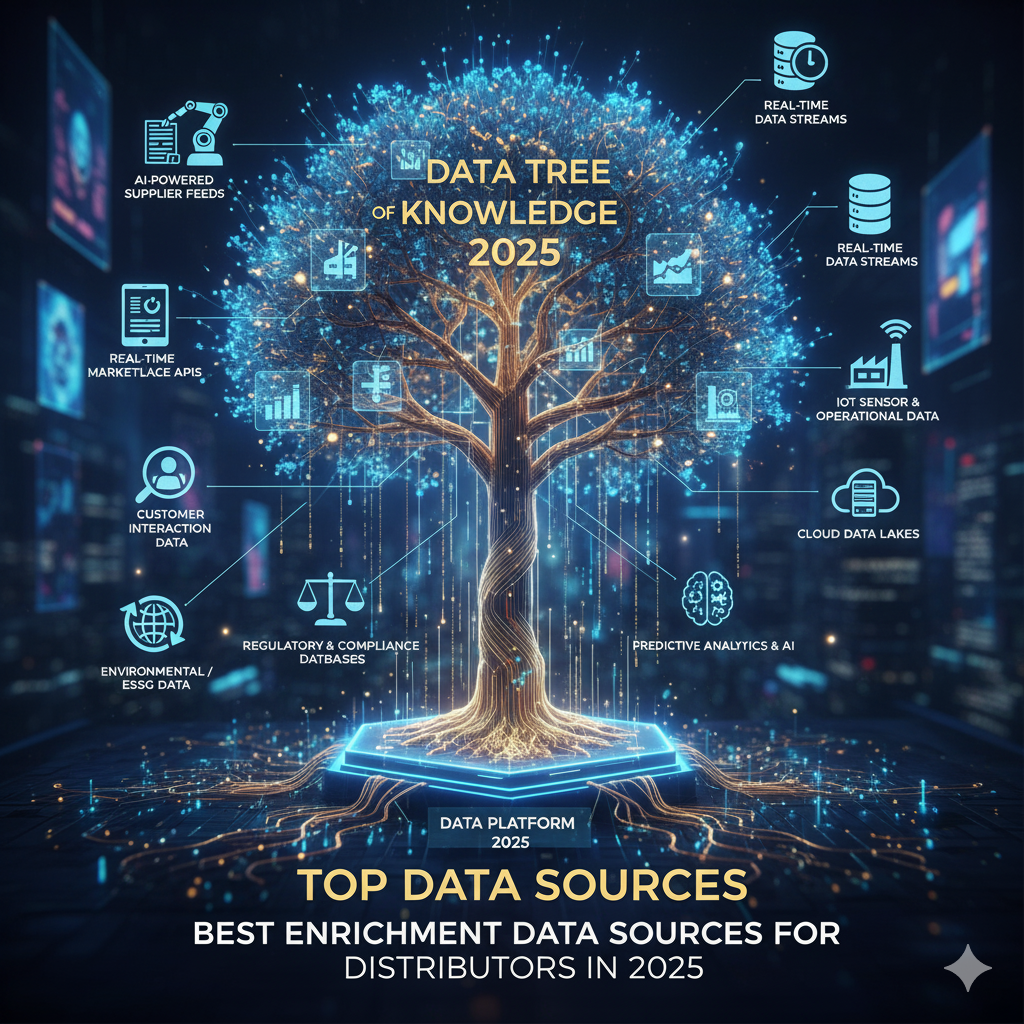
In 2025, distributors are operating in one of the most competitive data-driven landscapes the industry has ever seen. With supply chains evolving rapidly, customer expectations rising, and digital channels becoming dominant, distributors can no longer rely on basic product, pricing, and customer records. Data enrichment has become essential- not just to run operations, but to stay profitable and competitive.
The right enrichment sources allow distributors to improve targeting, optimize sales territories, anticipate customer needs, and ultimately drive higher margins. This guide explores the best enrichment data sources for distributors in 2025, along with examples of how they support growth, operational efficiency, and better customer experience.
Why Data Enrichment Matters for Distributors in 2025
Before diving into the sources, here’s why smart distributors now prioritize data enrichment:
Higher accuracy for sales forecasting & demand planning
Sharper segmentation for marketing and targeted outreach
Better pricing strategies through competitive benchmarking
Improved customer experience with richer profile intelligence
Optimized sales territories and reduced cost of service
More complete visibility across the supply chain
Data enrichment also directly boosts SEO efforts. When distributors use enriched datasets for content strategy, localized landing pages, or niche industry targeting, they attract more relevant traffic and generate higher-quality leads.
Top Enrichment Data Sources Every Distributor Should Use in 2025
Below are the most impactful data sources distributors use to improve decision-making and operational workflows.
1. Firmographic & Business Identity Data (B2B Intelligence Platforms)
Sources: ZoomInfo, Apollo, Clearbit, Dun & Bradstreet
Firmographic data is foundational for distributors who want to classify accounts, verify leads, and target the right buyers.
Useful data points include:
Company size and revenue
NAICS/SIC codes
Industry segment
Contact roles & org structures
Business location hierarchy
Why it matters:
Sales teams can prioritise high-value accounts, marketing teams can segment intelligently, and executives can analyse territory performance accurately.
2. Geospatial & Territory Optimisation Data
Sources: Google Maps API, OpenStreetMap, USPS/Canada Post datasets, GIS providers
Geospatial data is crucial for improving logistics planning and reducing cost-to-serve.
This data helps distributors:
Map customer locations
Minimize travel time for field reps
Balance sales territory workloads
Identify underserved regions
Improve routing efficiency
Geo-enriched data supports a major SEO opportunity as well—distributors can create location-specific landing pages, strengthening local search visibility and capturing regional customers.
3. Product Content & Technical Specification Databases
Sources: Manufacturer PIM feeds, Trade-service databases, Industry catalogs
For distributors with large catalogs, enriched product data drastically improves online visibility and buyer experience.
Enrichment includes:
Specifications
Certifications
Use cases
Images and CAD files
Cross-sell/upsell associations
Why it matters:
Rich product content directly affects SEO, since more detailed listings gain higher rankings and increase organic conversions.
4. Market Pricing & Competitive Benchmarking Data
Sources: Industry pricing databases, marketplace scrapers, third-party pricing APIs
Dynamic pricing is becoming the norm. Distributors using enriched pricing data gain a competitive edge.
You get:
Real-time market pricing
Competitor trends
Margin opportunities
Pricing anomalies
This enables:
Smart discounting, maximized margins, and precise promotions—all essential in a 2025 marketplace driven by speed and transparency.
5. Supply Chain & Inventory Enrichment Data
Sources: Supplier feeds, logistics APIs, ERP integrations
With global supply networks still in flux, enriched inventory and shipment data improve reliability and customer satisfaction.
You can enrich:
Lead times
Stock availability
Supplier performance
Freight estimates
This ensures you always have the clearest possible picture of product availability, reducing backorders and customer friction.
6. Behavioral & Intent Data
Sources: Website analytics, heat- maps, search intent tools, review platforms
Distributors who understand what customers intend to buy or research gain a massive advantage.
Enrichment includes:
Buyer engagement signals
Product interest indicators
Search behavior
Content consumption trends
This data boosts both outbound sales effectiveness and inbound SEO strategy by revealing what prospects actually care about.
7. Financial Risk & Credit Scoring Data
Sources: Equifax, Experian, Creditsafe
Distributors must protect themselves from credit risk, especially when extending terms.
Relevant enrichment fields include:
Credit scores
Payment history
Risk categories
Legal filings
This allows smarter, safer account decisions and reduces exposure to delinquent customers.
8. Sustainability, Compliance & ESG Data
Sources: Government registries, certifying agencies, ESG databases
With sustainability benchmarks rising across industries, enriched ESG data helps distributors choose ethically aligned suppliers and products.
This includes:
Energy ratings
Emissions data
Sourcing transparency
Compliance certifications
Customers increasingly prefer distributors who can provide this information transparently.
How Distributors Use Enrichment to Improve SEO in 2025
Data-enriched websites outperform competitors for several reasons:
1. Better content quality
Product pages rank higher when enriched with specs, applications, and metadata.
2. Powerful local SEO
Geo-enriched customer and territory datasets allow distributors to build localized landing pages that capture high-intent buyers.
3. Niche search visibility
With enriched industry and product intelligence, distributors can target long-tail keywords competitors overlook.
4. Stronger backlink strategies
Accurate datasets support resource pages, reports, and insights that earn organic backlinks.
SEO in 2025 is no longer about keywords alone- it’s powered by quality data and deep customer context.
Conclusion: Enrichment Is Now a Competitive Necessity
In 2025, the distributors winning market share are the ones investing in clean, enriched, and actionable datasets. Whether it’s optimising sales territories, pricing competitively, improving product listings, or boosting SEO performance, the right enrichment sources unlock growth at every level.
If you’re looking to modernise your data strategy, automate enrichment, or build analytics pipelines tailored for distributors, Intuitico.io is here to help.
Visit our homepage to learn more: https://intuitico.io
Have questions? Email us at “will.chen@intuitico.io.
For a free 30 minutes consultation, you can book a meeting using this link: https://calendly.com/will-chen-intuitico/30min
