Measuring Sales Rep Effectiveness Beyond Revenue Numbers
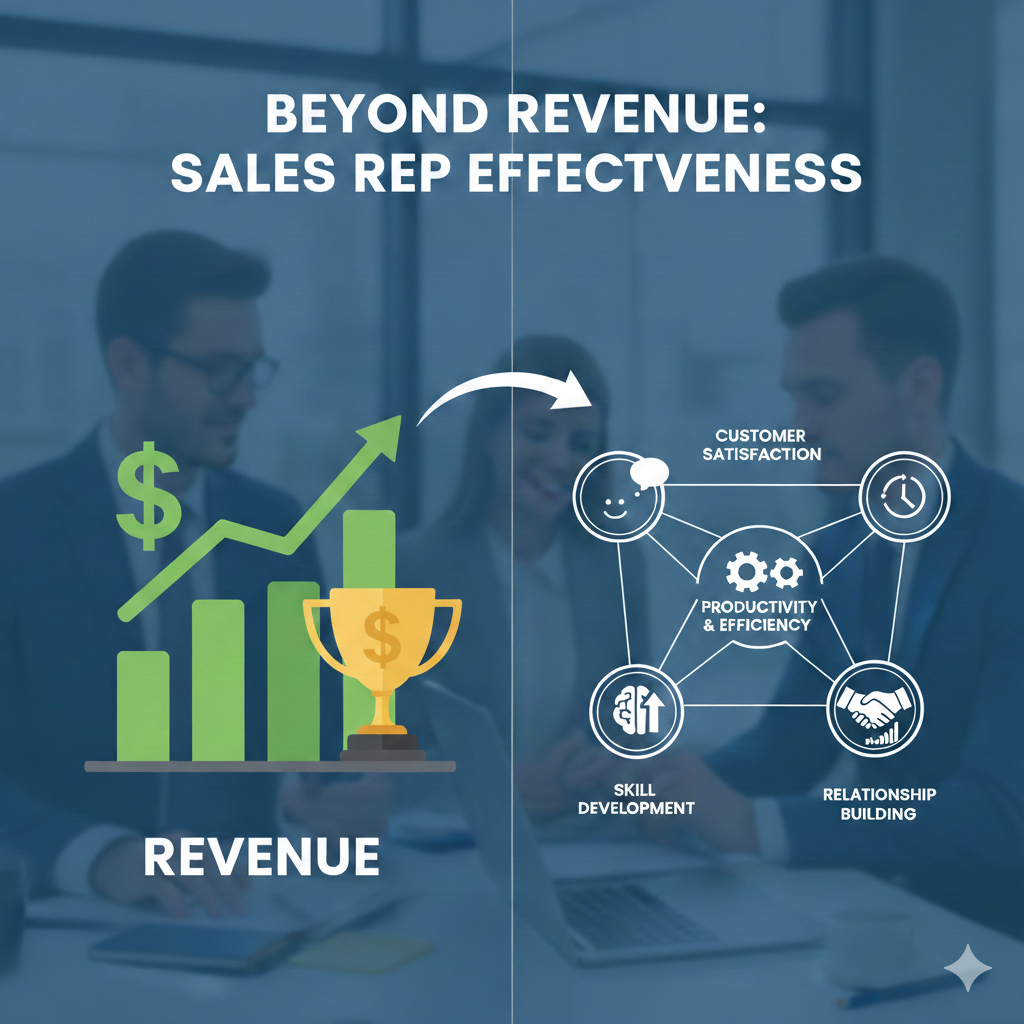
Revenue is the most visible outcome of a sales organization, but it is also the most misleading metric when used alone to measure sales rep effectiveness. Two sales reps may generate similar revenue while operating very differently one may build sustainable pipelines and long-term relationships, while the other may rely on short-term discounts or inherited accounts.
For companies looking to build predictable and scalable revenue growth, evaluating sales performance requires deeper insight. Modern data analytics makes it possible to measure what truly drives sales success, not just the final number on a quarterly report.
In this article, we explore how organizations can measure sales rep effectiveness beyond revenue and use data-driven insights to improve performance, forecasting accuracy, and long-term growth.
Why Revenue Alone Is Not Enough
Revenue reflects outcomes, not behaviors. It does not explain:
How revenue was generated
Whether growth is repeatable
How healthy the pipeline is
Whether customers are satisfied
If sales processes are improving or degrading
A rep who closes a few large deals late in the quarter may look exceptional, while another who consistently builds pipeline and nurtures accounts might appear average—even though the latter creates more predictable long-term growth.
To truly understand performance, organizations must evaluate the activities and patterns that lead to revenue.
Key Dimensions of Sales Rep Effectiveness
1. Pipeline Generation and Coverage
A strong pipeline ensures future revenue. Measuring how effectively a rep creates opportunities is essential.
Important metrics include:
Number of qualified opportunities created
Pipeline coverage ratio
Opportunity creation consistency
Conversion rates from lead to opportunity
Pipeline growth month over month
A rep who consistently builds pipeline reduces revenue volatility and dependence on last-minute deals.
2. Conversion Efficiency Across Sales Stages
Not all reps move deals through the funnel equally. Some stall opportunities in certain stages, creating forecasting inaccuracies.
Evaluate:
Stage-to-stage conversion rates
Average time spent per stage
Drop-off points in the funnel
Deal progression velocity
This analysis identifies where coaching or process improvements are needed.
3. Sales Cycle Length
Shorter, efficient sales cycles reduce acquisition costs and improve scalability.
Measure:
Average sales cycle duration
Variance by deal size or industry
Rep performance relative to cycle benchmarks
A rep closing deals faster without discounting often demonstrates stronger qualification and negotiation skills.
4. Activity Quality vs. Activity Volume
Activity metrics alone calls made or emails sent do not indicate effectiveness. High activity with low outcomes signals inefficiency.
Focus on:
Meetings booked per outreach effort
Opportunity creation per activity
Follow-up quality and consistency
Engagement rates
Quality conversations matter more than sheer activity numbers.
5. Customer Retention and Expansion Impact
Sales effectiveness does not end at closing. Deals that churn quickly indicate misalignment or poor qualification.
Consider:
Account retention rates
Upsell and expansion contribution
Customer satisfaction feedback
Renewal success
Reps who sell the right solutions build long-term value.
6. Forecast Accuracy Contribution
Forecast accuracy is critical for operational planning.
Assess:
Forecast accuracy per rep
Commit reliability
Late-stage deal slippage
Pipeline hygiene
Reps who consistently forecast accurately help leadership make confident decisions.
7. Collaboration and Deal Support
Complex deals often require teamwork across marketing, product, and customer success.
Effective reps:
Collaborate across departments
Use internal resources efficiently
Share insights that improve team performance
Collaboration contributes to scalable success.
Building a Balanced Sales Performance Framework
Organizations should develop a scorecard combining multiple performance dimensions, such as:
Revenue performance
Pipeline generation
Conversion efficiency
Sales cycle speed
Activity effectiveness
Customer retention
Forecast reliability
A weighted scoring model helps evaluate performance holistically rather than rewarding only final outcomes.
Using Data Analytics to Improve Sales Performance
Raw CRM data alone is insufficient. Many organizations struggle with fragmented or poorly structured sales data.
A modern analytics approach enables:
Automated performance tracking
Funnel analysis
Opportunity health scoring
Forecast modeling
Rep benchmarking
Territory and segment performance evaluation
Advanced analytics reveal hidden trends, such as:
Which behaviors lead to higher win rates
Where deals typically stall
Which customer segments generate long-term value
Which reps need targeted coaching
These insights transform sales management from reactive to proactive.
Coaching Sales Reps with Better Insights
Once effectiveness metrics are identified, coaching becomes more targeted.
For example:
Low pipeline creation → Improve prospecting strategies
Poor conversion rates → Improve qualification techniques
Long sales cycles → Improve objection handling
Low retention → Improve solution alignment
Instead of generic feedback, managers can offer specific improvement guidance backed by data.
Aligning Incentives with Long-Term Value
Compensation structures often reinforce revenue-only thinking. Adding performance components linked to:
Pipeline health
Customer retention
Forecast accuracy
Expansion contribution
encourages sustainable selling behaviors.
This alignment ensures reps focus not just on closing deals but on closing the right deals.
How Modern Sales Organizations Win
High-performing sales organizations increasingly use analytics to drive decisions.
They focus on:
Predictable pipeline generation
Efficient deal movement
Sustainable customer relationships
Data-driven coaching
Performance transparency
Revenue becomes a result of optimized processes rather than heroic last-minute efforts.
SEO Considerations: Helping Your Sales Insights Get Found
For businesses publishing sales and analytics insights online, SEO plays a crucial role in visibility.
To help articles like this perform well in search engines:
Use relevant keywords naturally, such as sales performance analytics, sales effectiveness metrics, and pipeline management strategies.
Write clear, human-centered content instead of keyword-stuffed articles.
Use structured headings for readability.
Include practical examples and actionable insights.
Keep content updated to reflect evolving sales practices.
Search engines increasingly reward helpful, informative content that genuinely addresses reader questions.
Final Thoughts
Measuring sales rep effectiveness beyond revenue numbers gives organizations clarity, predictability, and scalability. It transforms sales management from outcome monitoring to performance optimization.
When companies understand what truly drives sales success, they can coach better, forecast better, and grow faster.
Data-driven sales organizations consistently outperform competitors relying only on traditional revenue metrics.
Ready to Turn Sales Data into Actionable Insights?
At Intuitico, we help organizations unlock the power of their sales and operational data to drive smarter decisions and predictable growth.
Visit our website to learn more: https://intuitico.io
If you'd like to explore how analytics can improve your sales performance, forecasting, and revenue strategy, we encourage you to reach out and email us at “will.chen@intuitico.io“ and our team would be happy to discuss your needs.
For a free 30 minutes consultation, you can book a meeting using this link: “https://calendly.com/will-chen-intuitico/30min”
