Identifying Margin Risk Accounts Before They Become Unprofitable
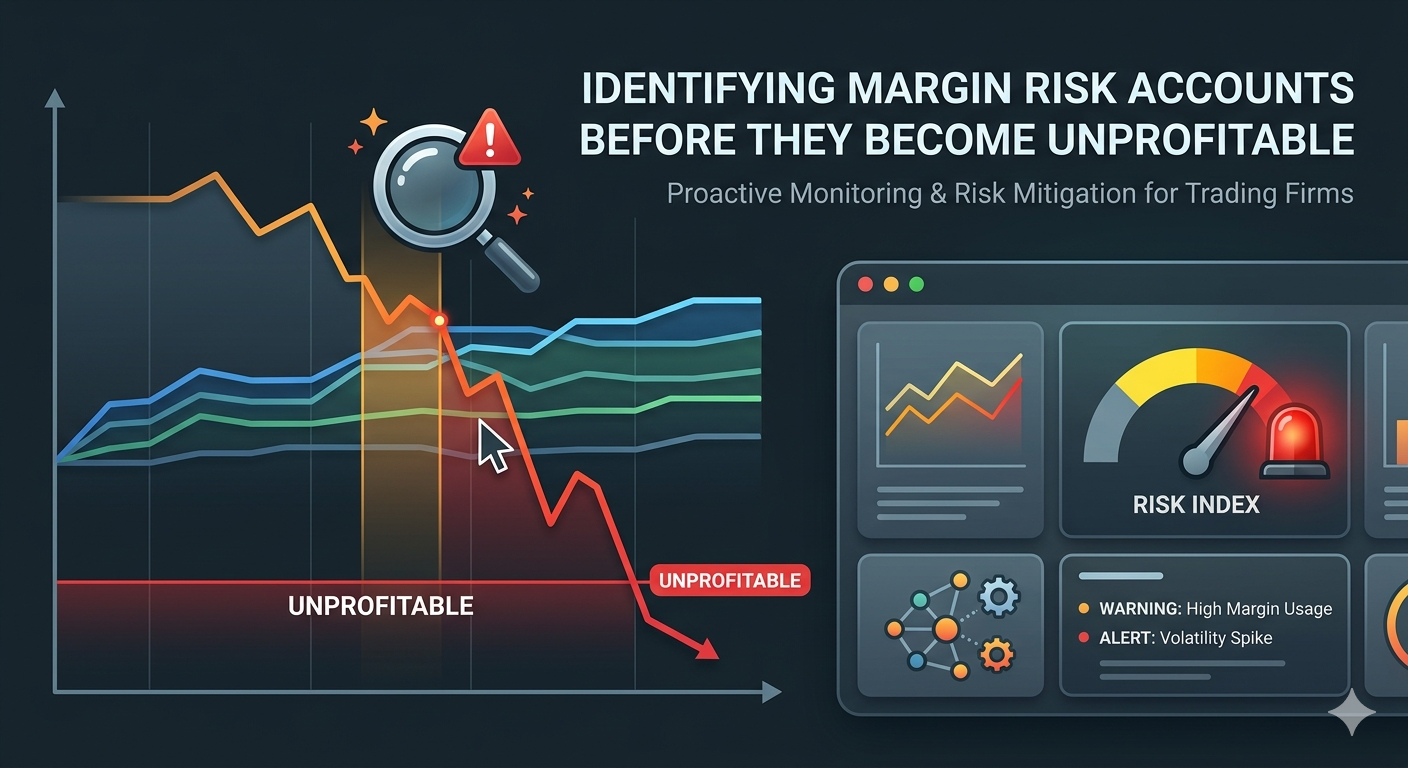
In today’s competitive business environment, profitability is not only driven by revenue growth but by maintaining healthy margins across customers and accounts. Many companies unknowingly carry accounts that appear profitable at first glance but gradually erode margins due to hidden costs, inefficient logistics, discounting, or operational inefficiencies.
These “margin risk accounts” often go unnoticed until they begin affecting the bottom line. By the time leadership identifies the issue, the company may already be losing money on key relationships.
The good news is that with the right data analytics and monitoring framework, organizations can identify margin risks early and take proactive action before accounts become unprofitable.
This article explores how businesses can detect margin risk accounts early, the signals to watch for, and how analytics platforms can turn raw data into actionable insights.
Understanding Margin Risk Accounts
A margin risk account is a customer or business relationship that generates revenue but delivers declining or insufficient profit margins relative to the cost of serving that account.
While sales teams often focus on revenue growth, the true measure of business health lies in contribution margin.
Some common characteristics of margin risk accounts include:
Frequent special pricing or discounts
High service or support costs
Inefficient shipping or logistics requirements
Excessive order customization
Unpredictable demand patterns
High return or claim rates
Without proper analytics, these issues can remain hidden within aggregated financial reports.
Why Margin Risk Accounts Go Undetected
Many organizations struggle to detect margin risk early because their reporting systems focus on top-line revenue rather than account-level profitability.
Typical reporting challenges include:
1. Fragmented Data Sources
Sales, logistics, finance, and customer service data often exist in separate systems. Without integrated analytics, it becomes difficult to see the full profitability picture.
2. Lack of Real-Time Visibility
Financial reviews often occur monthly or quarterly, which means margin deterioration may continue unnoticed for extended periods.
3. Hidden Operational Costs
Costs such as rush orders, small shipments, manual processing, or support hours are rarely allocated directly to individual accounts.
When these factors accumulate, accounts that appear profitable may actually be draining resources.
Key Indicators of Margin Risk
Organizations can detect margin risk early by monitoring several key indicators.
1. Declining Gross Margin Trends
A consistent decline in margin over time is often the first warning sign. Even small percentage drops can compound into significant profit losses.
Key signals include:
Margin trending downward over multiple months
Margins significantly below company averages
Margins dropping after new pricing agreements
2. High Cost-to-Serve Ratio
Some accounts require significantly more operational effort than others.
Examples include:
Frequent small orders
Special packaging requirements
High-touch customer service
Complex delivery logistics
When the cost to serve exceeds the expected margin, profitability quickly disappears.
3. Excessive Discounting
Discounting can be a useful sales strategy, but when overused it can destroy margins.
Companies should monitor:
Discount frequency by account
Average discount percentage
Margin impact of negotiated pricing agreements
4. Logistics and Supply Chain Inefficiencies
Shipping costs, delivery routes, and inventory requirements can significantly impact margins.
For example:
Remote delivery locations
Expedited shipments
Split shipments due to inventory shortages
Advanced dashboards that track operational metrics such as inventory levels, shipment performance, and supplier efficiency help companies identify inefficiencies early.
5. High Return or Claim Rates
Frequent product returns, warranty claims, or order disputes can quickly erode profitability.
These signals often indicate deeper issues such as:
Product fit problems
Customer expectation mismatches
Operational errors in order fulfillment
How Data Analytics Helps Identify Margin Risk Early
Traditional reporting often focuses on historical financial data. Modern analytics platforms enable organizations to detect margin risk proactively.
Advanced analytics can provide:
Integrated Data Visibility
By combining data from ERP, CRM, logistics, and finance systems, businesses can gain a unified view of account performance.
This allows teams to analyze:
Revenue vs. margin by account
Cost-to-serve metrics
Operational impact on profitability
Predictive Risk Detection
Machine learning models can identify patterns that typically precede margin decline.
For example:
Accounts with increasing discount frequency
Customers with rapidly rising logistics costs
Accounts with growing service demands
These predictive insights allow businesses to intervene before profitability is lost.
Real-Time Dashboards
Modern analytics dashboards provide real-time visibility into operational performance, helping leadership identify risk accounts quickly.
Key dashboard metrics may include:
Gross margin by account
Discount impact analysis
Cost-to-serve ratios
Logistics and fulfillment performance
When these insights are presented in an accessible dashboard, teams can make faster and better decisions.
Strategies to Protect Margins
Once margin risk accounts are identified, companies can take targeted action to restore profitability.
1. Adjust Pricing Structures
Review pricing agreements and align them with the true cost of serving the customer.
2. Improve Operational Efficiency
Optimize delivery routes, inventory allocation, and order batching.
3. Renegotiate Service Levels
Align customer expectations with operational capabilities.
4. Segment Customers by Profitability
Not all customers require the same level of service. Segmenting accounts allows businesses to allocate resources more strategically.
5. Implement Data-Driven Decision Making
Organizations that rely on real-time analytics make more informed decisions and respond faster to emerging risks.
The Strategic Value of Early Margin Risk Detection
Identifying margin risk accounts early provides several important benefits:
Protects profitability before losses accumulate
Improves operational efficiency
Enables better pricing decisions
Strengthens customer relationship management
Supports long-term business growth
Most importantly, it shifts organizations from reactive financial analysis to proactive margin management.
Final Thoughts
In many industries, including building materials, distribution, and manufacturing, revenue growth alone does not guarantee profitability. Companies must understand not only how much revenue they generate, but which accounts truly contribute to sustainable margins.
By leveraging advanced analytics, integrated data, and predictive insights, organizations can detect margin risk accounts early and take corrective action before they become unprofitable.
The companies that succeed in today’s data-driven economy are those that turn operational data into strategic insight.
Call to Action
At Intuitico, we help companies unlock the power of their operational data through advanced analytics and intelligent dashboards. Our solutions enable businesses to identify margin risks, optimize operations, and make data-driven decisions that improve profitability.
Learn more about how we can help your business: https://intuitico.io
If you'd like to discuss how data analytics can improve margin visibility in your organization, feel free to reach out to us at will.chen@intuitico.io.
For a free 30 minutes consultation, you can book a meeting using this link:
https://calendly.com/will-chen-intuitico/30min
