How Customer Buying Patterns Should Influence Distributor Pricing
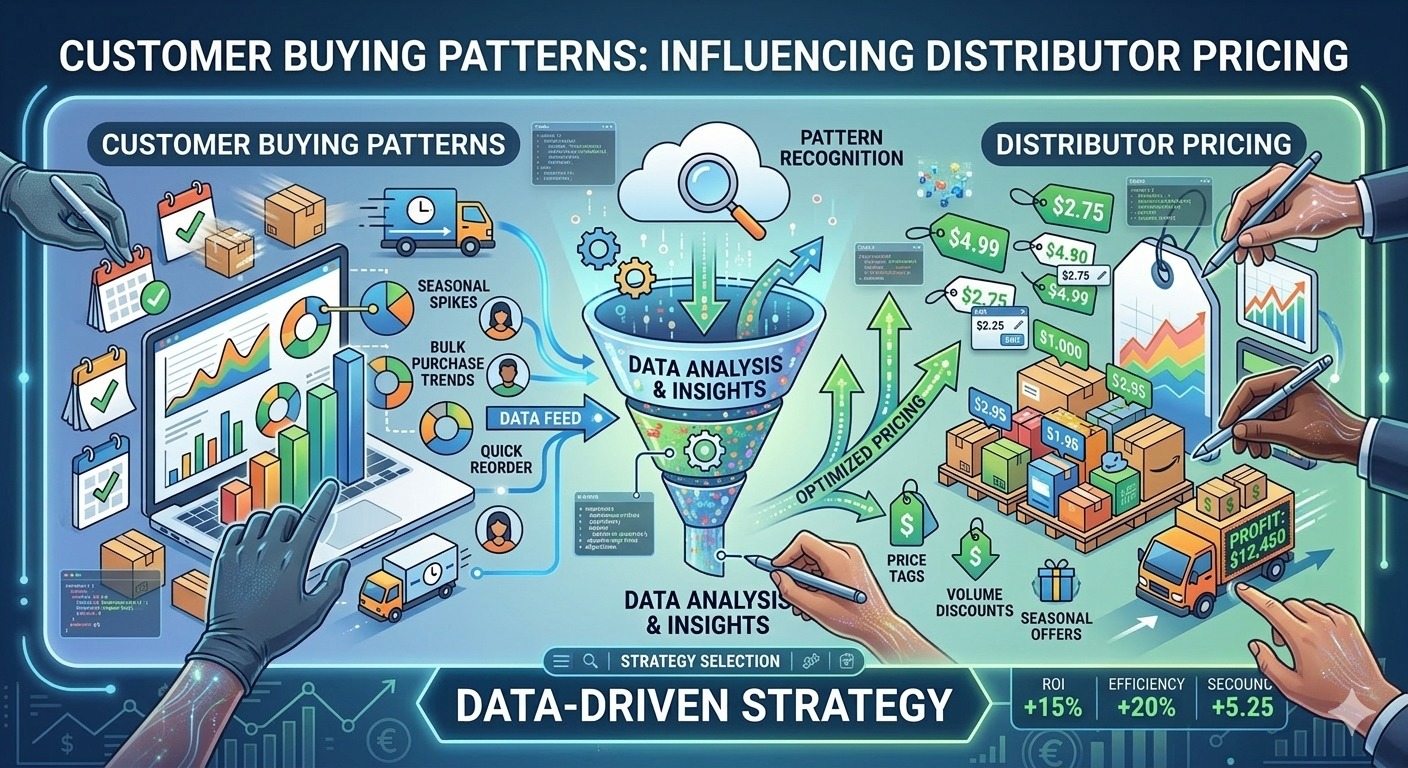
Pricing is one of the most powerful levers available to distributors. Yet many distributors still rely on static markups or simple cost-plus pricing strategies that fail to reflect how customers actually buy.
In reality, customer buying patterns reveal valuable insights about demand, price sensitivity, and purchasing behavior. When distributors analyze these patterns properly, they can build smarter pricing strategies that increase margins, improve customer retention, and strengthen competitive positioning.
In this article, we explore how understanding customer buying behavior should directly influence distributor pricing strategies and how modern data analytics makes this possible.
Why Customer Buying Patterns Matter
Every distributor serves a wide range of customers: contractors, builders, retailers, manufacturers, and more. Each segment behaves differently when purchasing products.
Some customers buy in large volumes but demand aggressive discounts. Others purchase frequently in smaller quantities but prioritize reliability and availability. Still others are highly price-sensitive and will switch suppliers quickly.
Without analyzing these patterns, distributors risk using one-size-fits-all pricing, leaving money on the table.
Understanding buying patterns allows distributors to:
Identify which customers are price sensitive
Detect which products drive recurring demand
Discover opportunities for premium pricing
Optimize discounts and contract pricing
Modern analytics tools can visualize these patterns through dashboards and reports, helping organizations make better pricing decisions based on real data rather than assumptions.
Key Buying Patterns Distributors Should Analyze
1. Purchase Frequency
Customers who purchase regularly often value convenience and reliability more than price alone.
For example:
Weekly or monthly buyers may accept slightly higher pricing in exchange for dependable inventory availability.
Infrequent buyers are often more price-sensitive and may require promotions to convert.
Distributors can use this insight to structure loyalty-based pricing models that reward consistent purchasing behavior without unnecessarily discounting all orders.
2. Order Volume
Order size is one of the most common variables used in pricing strategies.
However, many distributors apply blanket volume discounts that may be too generous.
Instead, data analysis should determine:
Whether large orders actually reduce operational costs
Whether volume buyers would still purchase at slightly higher price levels
Whether discounts truly drive incremental demand
A more refined volume-based pricing structure can significantly improve margins.
3. Product Mix and Basket Behaviour
Customer purchasing behaviour rarely revolves around a single product. Instead, orders often include bundles of complementary items.
For example:
Cabinets + hardware
Lumber + fasteners
Doors + trim
By analyzing product combinations, distributors can:
Bundle products strategically
Apply targeted pricing on high-margin items
Use anchor products to drive larger basket sizes
This approach increases overall profitability without directly raising prices.
4. Seasonal and Demand Trends
Demand patterns fluctuate across seasons, construction cycles, and market conditions.
Some products experience surges during peak construction periods, while others sell steadily year-round.
Using dynamic pricing strategies, distributors can adjust prices based on demand fluctuations raising prices during peak demand and moderating them during slower periods. Dynamic pricing aligns prices with market demand and helps allocate supply more efficiently.
5. Customer Price Sensitivity
Not all customers respond to price changes the same way.
By analyzing historical purchasing data, distributors can identify:
Customers who stop buying after small price increases
Customers who maintain purchasing behavior despite higher prices
Customers who primarily prioritize service and availability
This enables segment-based pricing, where pricing structures vary depending on customer type, purchasing patterns, and strategic value.
How Data Analytics Enables Smarter Pricing
Historically, analyzing customer behavior required extensive manual work and spreadsheets. Today, modern analytics tools allow distributors to analyze thousands of transactions quickly and visualize trends through dashboards and reporting tools.
These systems collect and organize data from multiple sources and present it through charts, graphs, and performance metrics so decision-makers can easily understand patterns and trends.
With the right analytics platform, distributors can:
Track customer lifetime value
Monitor pricing performance by product
Identify margin leakage from excessive discounting
Simulate pricing changes before implementing them
In one retail distribution case study, implementing data-driven pricing optimization increased profitability by 15% and expanded market share by 10%, demonstrating the tangible impact of analytics-driven pricing strategies.
Practical Steps Distributors Can Take Today
Distributors do not need complex AI systems to begin improving pricing strategies. A few structured steps can unlock valuable insights:
1. Consolidate Transaction Data
Bring together sales data from ERP systems, CRM platforms, and order management systems.
2. Segment Customers
Group customers based on purchasing behavior, order volume, and industry type.
3. Analyze Historical Pricing
Evaluate how price changes affected order volume and revenue.
4. Identify Margin Leakage
Look for customers receiving unnecessary discounts.
5. Test Pricing Adjustments
Run controlled experiments to measure how customers respond to pricing changes.
Over time, these insights form the foundation for data-driven pricing optimization.
The Strategic Advantage of Data-Driven Pricing
Distributors operate in a competitive environment where margins are often tight. Pricing strategies that ignore customer behavior are increasingly risky.
Organizations that analyze buying patterns gain a powerful advantage:
Higher profit margins
Better customer segmentation
More efficient discount strategies
Improved sales forecasting
Stronger customer relationships
Ultimately, pricing should reflect how customers actually buy—not just how products are sourced or stocked.
This is where advanced data analytics platforms provide a competitive edge.
Final Thoughts
Customer buying patterns hold the key to smarter distributor pricing strategies. When distributors leverage analytics to understand demand, purchasing behavior, and price sensitivity, they can transform pricing from a reactive task into a strategic growth driver.
Organizations that adopt this approach position themselves to compete more effectively while improving profitability across their entire product portfolio.
Call to Action
If your organization wants to better understand customer buying patterns and unlock smarter pricing strategies, the team at Intuitico can help.
Our data analytics solutions are designed specifically for companies in construction materials, distribution, and manufacturing—helping them turn raw data into actionable insights.
Visit our website: https://intuitico.io
Or email us at “will.chen@intuitico.io“ to start the conversation and learn how data-driven analytics can improve your pricing strategy.
For a free 30 minutes consultation, you can book a meeting using this link:
https://calendly.com/will-chen-intuitico/30min
