How Distributors Can Use Buyer Intent Data to Prioritise Sales Outreach
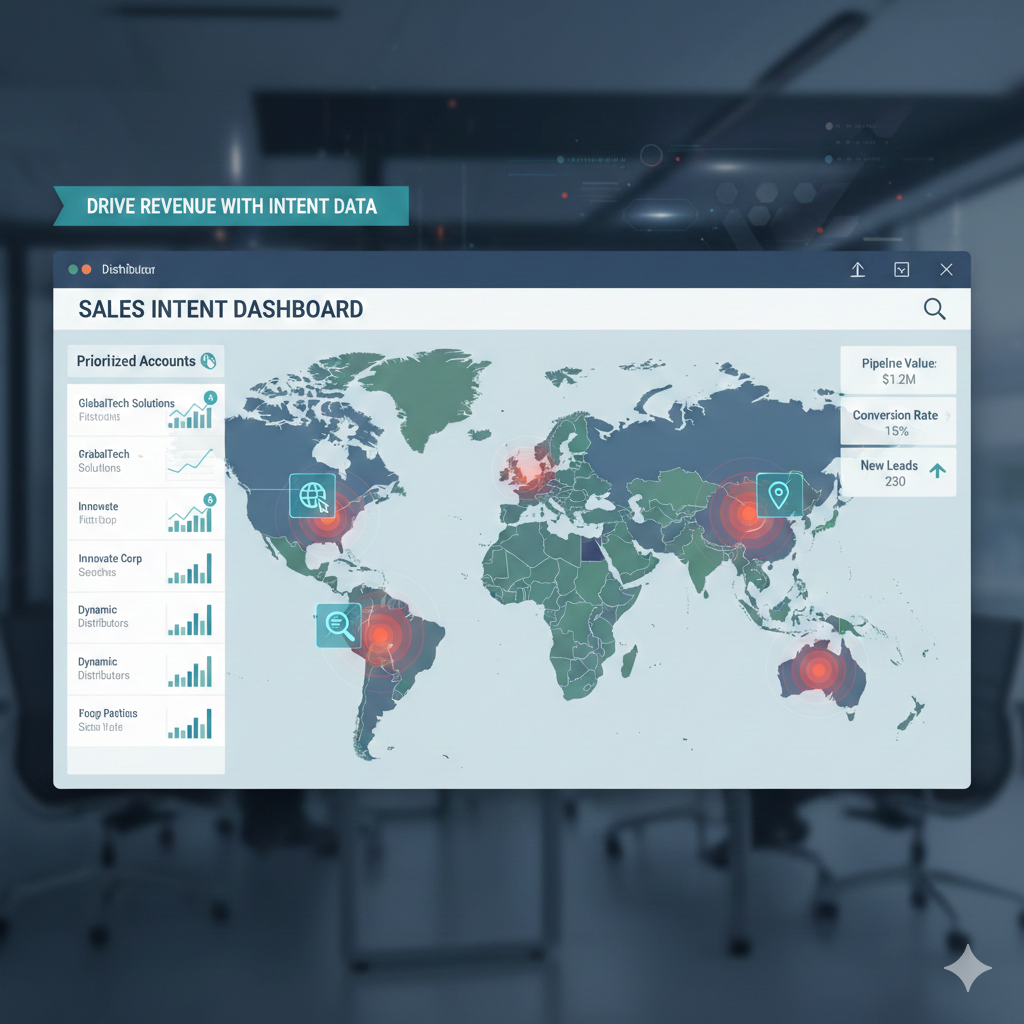
Turning anonymous interest into focused, high-impact sales conversations
In distribution, time is your most expensive resource. Sales teams spend countless hours calling, visiting, and emailing accounts—often without knowing which buyers are actually ready to engage. The result? Missed opportunities, wasted effort, and frustrated reps.
Buyer intent data changes that equation.
Instead of guessing who might be in market, distributors can now identify which accounts are actively researching products, comparing suppliers, or signaling near-term purchase intent. When used correctly, buyer intent data allows sales teams to prioritise outreach with precision engaging the right accounts, at the right time, with the right message.
In this article, we’ll explore what buyer intent data is, why it matters for distributors, and how to operationalize it to drive more productive sales outreach.
What Is Buyer Intent Data?
Buyer intent data captures signals that indicate a company or individual is actively researching products or services similar to what you sell. These signals are gathered from both first-party and third-party sources.
Common Buyer Intent Signals Include:
Repeated visits to specific product or category pages
Searches for relevant keywords or technical specs
Engagement with comparison content or pricing pages
Increased activity from a specific geographic territory
Content consumption across industry websites and platforms
For distributors, intent data answers one critical question:
Which of my accounts is actually in the buying cycle right now?
Why Buyer Intent Data Matters for Distributors
Distribution sales cycles are complex. Buyers often research quietly, involve multiple stakeholders, and only engage sales late in the process. By the time a rep hears from them, competitors may already be involved.
Buyer intent data helps distributors:
1. Focus on Accounts That Are Actively Buying
Instead of spreading effort evenly across hundreds of accounts, sales reps can concentrate on those showing real interest improving productivity and close rates.
2. Improve Sales Rep Accountability
Intent signals provide objective prioritisation. Outreach can be measured against real demand, not gut instinct.
3. Align Sales and Marketing
Marketing can drive intent, while sales converts it creating a shared, data-driven revenue strategy.
4. Shorten Sales Cycles
Engaging buyers earlier, with relevant insights, reduces friction and accelerates decisions.
How Buyer Intent Data Fits into a Distributor Sales Model
Buyer intent data works best when layered on top of your existing CRM, territory planning, and account segmentation.
Step 1: Identify High-Value Intent Signals
Not all intent is equal. For distributors, prioritise signals related to:
Specific SKUs or product categories
Bulk or repeat purchase indicators
Commercial or industrial use cases
Local or regional demand spikes
Step 2: Match Intent to Existing Accounts
Intent data becomes powerful when matched to:
Current customers
Dormant or underperforming accounts
High-potential prospects within your territory
This ensures reps are not chasing irrelevant leads.
Step 3: Score and Rank Accounts
Accounts should be ranked based on:
Frequency of intent signals
Recency of activity
Product relevance
Revenue potential
This creates a dynamic priority list that updates automatically as buyer behavior changes.
Turning Buyer Intent into Actionable Sales Outreach
Buyer intent data only works if it leads to better conversations—not just more activity.
Personalise Outreach Based on Intent
A rep reaching out with:
“I noticed your team has been reviewing options for commercial-grade fasteners in the last few weeks…”
will outperform a generic check-in every time.
Align Messaging with Buyer Stage
Early-stage intent: Educational insights, trend data, product comparisons
Mid-stage intent: Case studies, inventory availability, lead times
Late-stage intent: Pricing discussions, volume discounts, delivery commitments
Trigger Outreach Automatically
The most effective distributors automate alerts when:
An account crosses a defined intent threshold
Activity spikes within a rep’s territory
A dormant account re-enters the buying cycle
This ensures no opportunity slips through the cracks.
Common Mistakes Distributors Make with Buyer Intent Data
Despite its value, intent data is often underutilised. Watch out for these pitfalls:
Treating Intent as Leads
Intent is not a replacement for relationships it’s a prioritisation tool.
Overloading Reps with Data
Too many signals without context lead to confusion. Focus on clarity, not volume.
Ignoring Territory and Capacity
Intent data should respect territory assignments and rep bandwidth to remain effective.
Not Closing the Feedback Loop
Sales feedback should continuously refine intent scoring and prioritisation logic.
The Competitive Advantage of Acting on Intent
Distributors who adopt buyer intent data gain a clear advantage:
Sales reps spend time where it matters
Managers gain visibility into true pipeline health
Leadership makes decisions based on market demand not assumptions
In a market where speed and relevance win, intent data turns sales outreach from reactive to proactive.
Final Thoughts
Buyer intent data is no longer a “nice to have” for distributors it’s a necessity. When paired with the right analytics, territory intelligence, and sales workflows, it transforms how teams prioritise, engage, and win accounts.
The distributors who succeed are not the ones making the most calls—but the ones making the right calls.
Call to Action
If you’re looking to turn buyer intent signals into clear, actionable sales priorities, Intuitico can help.
Visit our website to learn more: https://www.intuitico.io
Or email us at “will.chen@intuitico.io” directly to start the conversation about smarter, data-driven sales outreach.
For a free 30 minutes consultation, you can book a meeting using this link:
”https://calendly.com/will-chen-intuitico/30min”
