Atlanta Housing Trends Signal a Strategic Shift for Builders and Contractors
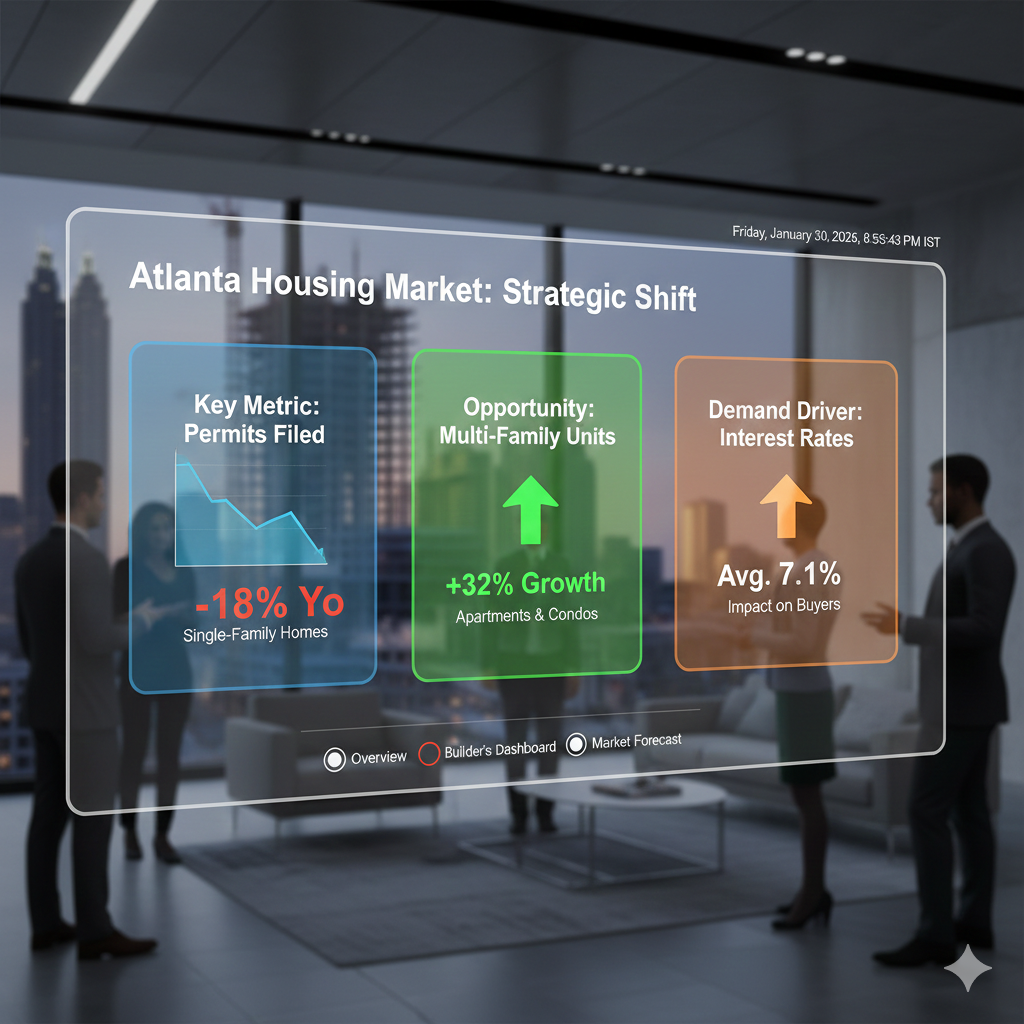
What Fulton County Mortgage Data Reveals About Demand, Opportunity, and Smarter Market Targeting
Over the past week, our team at Intuitico spent time analyzing housing finance data tied to the Atlanta, Georgia market specifically Fulton County while supporting research for a large exterior contractor operating in the region.
The goal was straightforward: identify early indicators that help contractors, remodelers, suppliers, and builders decide where demand is actually forming, rather than relying on lagging renovation data or anecdotal market signals.
To jumpstart deeper analysis, we leveraged Housing Trend Data Lab to structure initial insights and surface patterns worth investigating further. What we found paints a clear picture of a housing cycle shift and more importantly, highlights how construction and home services businesses can adapt strategically.
This article breaks down the data, explains why it matters, and outlines how contractors and builders can use these signals to refine marketing, operations, and partnership strategies.
The Big Picture: Atlanta’s Mortgage Activity Has Slowed Since 2021
Housing markets across the U.S. saw historic activity during 2020–2021. Ultra-low interest rates drove buying and refinancing at unprecedented levels.
But Fulton County data shows the cycle turning.
CAGR Trend Summary (2018-2024)
Mortgage activity in the region has declined since its 2021 peak:
Loan Count CAGR: −5.4% annually
Loan Amount CAGR: −0.9% annually
Simply put:
Fewer mortgages are being issued each year.
Total loan dollars are also shrinking.
What the Numbers Look Like in Practice - Let’s translate this into real volume.
YearLoan CountTotal Loan Volume2021 (Peak)22,169 loans$10.08B202412,781 loans$6.32B
That represents:
~42% fewer loans compared to the peak
~37% lower loan volume
This is a meaningful contraction not just normal seasonal variation.
But here’s the key insight:
Slowing mortgage volume does not mean opportunity disappears.
It means opportunity shifts and businesses that recognize where it shifts gain advantage.
Who’s Still Lending? Top Mortgage Players in Fulton County
Understanding lender activity helps identify who controls borrower relationships and referral ecosystems.
Top Lenders by Loan Count in 2024
Rocket Mortgage - 2,181 loans
United Shore Financial Services - 2,023
Truist Bank - 1,693
Bank of America - 1,609
PennyMac - 1,595
These institutions represent large borrower pipelines potential partners or intelligence sources for builders and contractors tracking homeowner movement.
Why Mortgage Data Matters More Than Renovation Data
Renovation data is notoriously messy.
Permit data lags.
Projects go unreported.
Small jobs never hit official records.
Informal contractor networks obscure demand.
Mortgage data, however, is clean and more importantly, it acts as a leading indicator.
Every Home Purchase Creates Opportunity
New homeowners frequently invest in:
Roofing replacement
Exterior upgrades
HVAC updates
Landscaping
Painting
Kitchen and bath remodeling
Flooring replacement
Security and smart home upgrades
Most of these investments occur within 12–36 months after purchase.
So when mortgage volumes rise or fall, future contractor demand shifts accordingly.
What the Fulton County Slowdown Actually Means
A drop in mortgage activity creates two realities:
1) Fewer Immediate Buyer-Driven Renovations
Less turnover means fewer “new owner” projects in the short term.
2) Existing Homeowners Stay Put Longer
Homeowners who locked in low mortgage rates are less likely to move.
And when people stay longer, they renovate instead of relocating.
This leads to:
Bigger remodel projects
Energy efficiency upgrades
Exterior improvements
Additions instead of moving
So demand doesn’t disappear it moves from purchase-driven projects to improvement-driven projects.
Strategic Implications for Contractors & Builders
Companies that rely purely on reactive demand often struggle in shifting markets. Instead, successful operators anticipate where demand will land next.
Here are practical strategic shifts businesses should consider:
1. Target Neighborhoods With Recent Buyer Clusters
Even with declining totals, thousands of homes still change hands yearly.
Mapping where purchases concentrate reveals:
Neighborhoods primed for renovations
Areas where canvassing and ads perform better
Zones worth prioritizing for partnerships
2. Partner With High-Activity Lenders and Realtors
Mortgage lenders and agents maintain continuous buyer flow.
Strategic partnerships can create steady referral pipelines.
3. Refocus Messaging Toward “Upgrade Instead of Move”
With higher interest rates discouraging relocation, marketing should emphasize:
Improve instead of moving
Add value to current homes
Renovate for comfort and resale
4. Build Long-Term Homeowner Funnels
Post-purchase homeowners invest over several years.
Smart contractors build marketing funnels that nurture homeowners long-term rather than chasing one-off jobs.
Data Helps Contractors Avoid Guesswork
Too many decisions in construction services still rely on intuition:
Which neighborhoods should we target?
Where should we expand crews?
Where should marketing dollars go?
Which regions are heating up or cooling down?
Mortgage and housing finance data allow companies to replace guesswork with evidence.
Businesses that consistently analyze data tend to:
Reduce customer acquisition costs
Improve close rates
Allocate crews efficiently
Expand into the right markets
The Hidden Opportunity in Slower Markets
Slowing markets often reward strategic operators.
Why?
Because competitors relying solely on boom cycles pull back, while smart businesses reposition.
In markets like Atlanta:
Homeowners stay longer.
Renovation budgets increase.
Exterior and structural upgrades gain priority.
Demand stabilizes rather than spikes.
The companies that use data to reposition capture disproportionate market share.
How Intuitico Helps Businesses Act on These Signals
At Intuitico, we specialize in transforming raw market data into actionable growth strategies for companies operating in construction, materials supply, and related sectors.
Our work helps clients answer questions like:
Where should we expand next?
Which neighborhoods should sales teams target?
Which partner networks matter most?
Where is renovation demand forming?
By combining housing, lending, demographic, and economic data, we help organizations move from reactive growth to strategic expansion.
Key Takeaways from the Atlanta Analysis
Let’s recap what Fulton County data is telling us:
Mortgage activity peaked in 2021 and declined afterward
Loan counts dropped roughly 42% since peak
Loan volume dropped roughly 37%
Home purchases remain a strong indicator of future renovation demand
Demand is shifting from turnover-driven to improvement-driven spending
Data-driven targeting is becoming essential for growth
For contractors and builders, the message is clear:
Market cycles change but opportunities remain for those who read the signals correctly.
SEO Considerations for Builders and Contractors Publishing Market Insights
Publishing data-backed market insights isn’t just good analysis it also improves online visibility.
Companies in construction and building services can strengthen SEO performance by:
Publishing regional housing insights regularly
Targeting keywords like:
“Atlanta housing trends”
“Fulton County home renovation demand”
“contractor market analysis Atlanta”
Writing educational content rather than promotional pieces
Using data-backed insights that others reference and link to
Consistent publication builds authority and improves organic search rankings over time.
Let’s Turn Market Data Into Growth Strategy
If your organization operates in construction, renovation, materials supply, or housing services, understanding where demand is heading not where it was is critical.
Intuitico helps businesses transform data into real strategic advantage.
Visit our website: https://intuitico.io
Reach out to our team at “will.chen@intuitico.io“ to discuss how data-driven insights can guide your next phase of growth.
For a free 30 minutes consultation, you can book a meeting using this link:
https://calendly.com/will-chen-intuitico/30min
