Market Share vs. Wallet Share: Which One Should Distributors Prioritise?
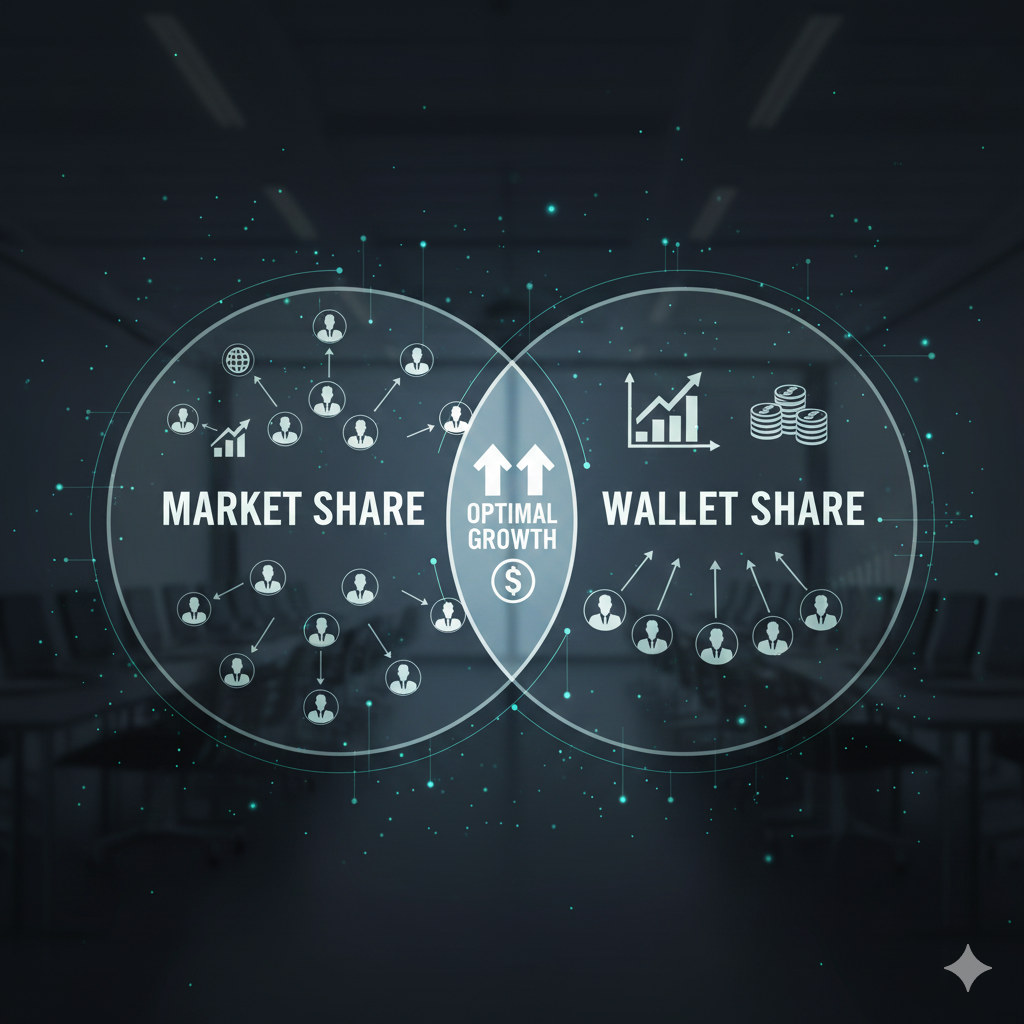
In distribution, growth conversations almost always start with the same question:
“How do we win more business?”
For decades, the default answer has been market share sell to more accounts, expand into new territories, onboard more customers. But today’s distribution landscape is very different. Rising acquisition costs, tighter margins, supply chain volatility, and increasingly informed buyers are forcing leaders to rethink that strategy.
That’s where wallet share enters the conversation.
So which one should distributors prioritise: market share or wallet share?
The short answer: both but not equally, and not at the same time.
Let’s break it down.
Understanding the Difference
What Is Market Share?
Market share refers to the percentage of total market sales your company captures within a specific geography, product category, or customer segment.
For distributors, market share growth usually comes from:
Acquiring new customers
Entering new regions or verticals
Displacing competitors at existing accounts
Expanding product lines to attract new buyers
Why it matters:
Market share is a strong indicator of brand presence and competitive position. It’s often tied to long-term strategic dominance.
What Is Wallet Share?
Wallet share measures how much of a customer’s total spend in your category goes to you versus competitors.
For example:
A contractor spends $500,000 annually on building materials
They buy $150,000 from your distribution business
Your wallet share = 30%
Wallet share growth comes from:
Cross-selling and upselling
Better product availability
More targeted sales engagement
Improved customer experience
Deeper insight into customer buying behavior
Why it matters:
Wallet share directly impacts profitability and customer lifetime value.
Why Market Share Has Become Harder to Win
While market share sounds attractive, it has become significantly more expensive and complex to grow.
1. Customer Acquisition Costs Are Rising
Distributors are competing not only with peers, but also with:
Large national players
E-commerce platforms
Manufacturers selling direct
Winning new customers now requires more sales effort, marketing spend, and price concessions.
2. New Accounts Often Start Small
New customers rarely begin at full potential. It can take years before they reach meaningful revenue levels if they ever do.
3. Operational Complexity Increases
More customers often means:
More SKUs to manage
More delivery routes
More credit risk
More service demands
Market share growth without operational alignment can dilute margins.
Why Wallet Share Is the Faster, Smarter Win
For most distributors, the biggest growth opportunity already exists inside their current customer base.
1. You Already Have the Relationship
Your customers trust you. You’re already approved, onboarded, and in their systems. Increasing wallet share doesn’t require starting from zero.
2. Higher Wallet Share = Higher Margins
Selling more to existing customers often:
Reduces selling costs
Improves forecast accuracy
Increases order frequency and size
This leads to better margins and more predictable revenue.
3. Wallet Share Is Data-Driven
With the right analytics, distributors can identify:
Products customers buy elsewhere but not from you
Categories with high switching potential
Accounts with declining or untapped spend
This turns sales from reactive to strategic.
The Real Question: When Should You Prioritise Each?
Prioritise Wallet Share When:
You have a large, under-penetrated customer base
Sales reps manage hundreds of accounts with limited visibility
Revenue growth has plateaued despite stable customer count
Margin pressure is increasing
You lack clarity on customer buying patterns
In most mid-to-large distributors, this is the current reality.
Prioritise Market Share When:
You’ve already maximised wallet share across key accounts
Your core markets are saturated
You have strong operational scalability
You’re entering a new geography or vertical with clear demand
Market share expansion works best when it’s intentional and data-backed, not opportunistic.
Why the Best Distributors Don’t Choose One - They Sequence Them
High-performing distributors don’t debate market share vs. wallet share.
They sequence them.
First: Maximise wallet share within your existing accounts
Then: Use that stability and insight to pursue market share expansion more profitably
Wallet share creates the cash flow, confidence, and data foundation required to scale market share without eroding margins.
How Data Changes the Equation
This is where modern analytics platforms like Intuitico come into play.
By analysing:
Customer purchase history
Product-level penetration
Buying frequency and seasonality
Geographic and account-level patterns
Distributors gain visibility into where revenue is leaking and where opportunity is hiding.
Instead of asking sales reps to “sell more,” you empower them with:
Clear account prioritisation
Cross-sell and upsell recommendations
Actionable insights based on real behavior
This transforms sales execution from intuition-driven to intelligence-led.
Final Takeaway
If you’re a distributor looking for sustainable growth:
Market share builds presence
Wallet share builds profitability
In today’s environment, wallet share should come first.
It’s faster to unlock, cheaper to pursue, and far more predictable.
Once you fully understand and serve your existing customers, expanding market share becomes a strategic advantage not a risky bet.
Ready to Unlock Hidden Revenue in Your Existing Accounts?
Discover how data-driven insights can help you prioritize the right customers, products, and opportunities.
Visit our homepage: https://intuitico.io
Or email us at “will.chen@intuitico.io“ to start the conversation
For a free 30 minutes consultation, you can book a meeting using this link:
”https://calendly.com/will-chen-intuitico/30min”
