How to Filter Out Low-Quality Leads Before They Hit Your Sales Team
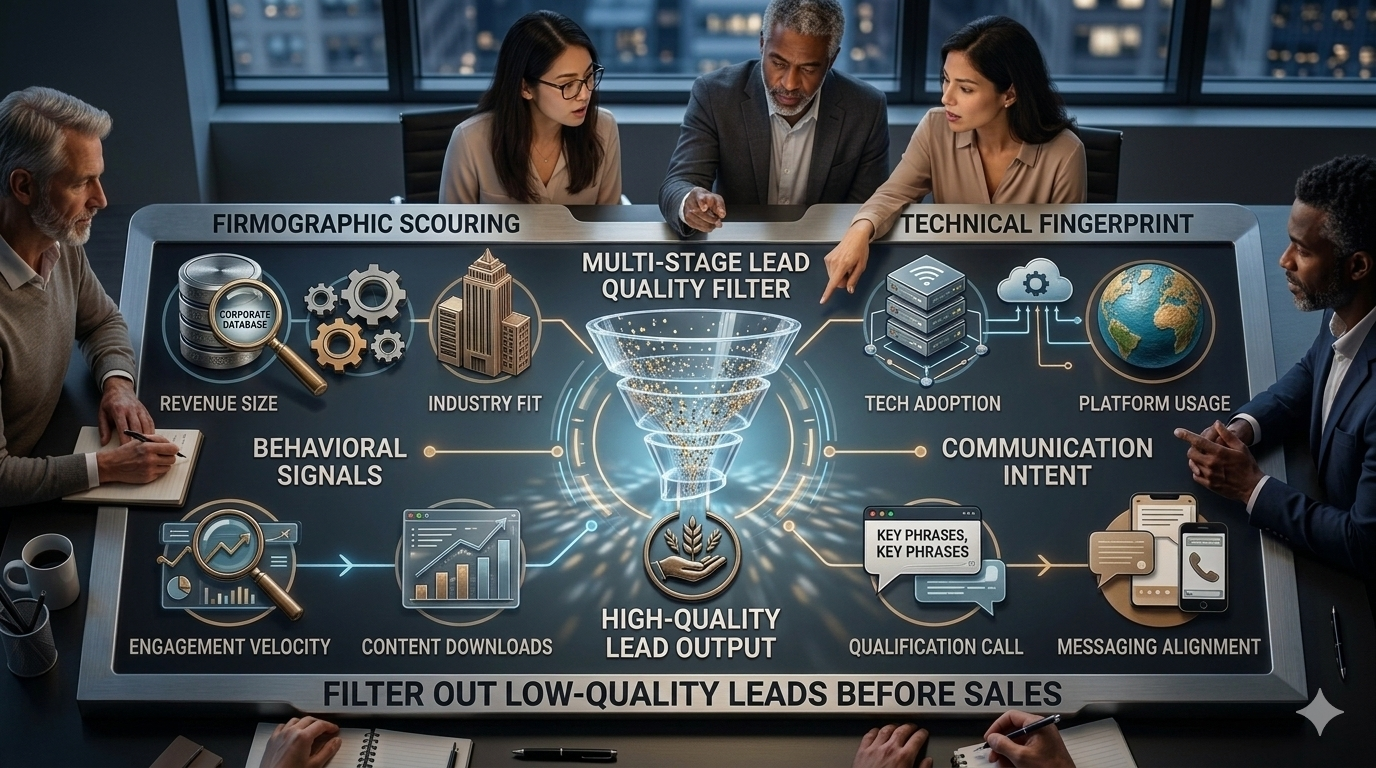
Generating leads is important but generating the right leads is what truly drives revenue. Many organizations invest heavily in marketing campaigns, paid ads, and outbound outreach, only to find their sales teams overwhelmed with prospects who were never likely to convert in the first place.
When low-quality leads reach your sales team, the consequences are significant: wasted time, lower morale, longer sales cycles, and declining conversion rates. The real solution is not simply increasing lead volume, but building a system that filters and qualifies leads before they ever reach sales.
In this article, we explore practical strategies businesses can implement to identify and eliminate low-quality leads early in the pipeline ensuring that sales teams spend their time engaging only with prospects that truly matter.
Why Lead Quality Matters More Than Lead Quantity
A high-performing sales funnel is not defined by how many leads enter it, but by how efficiently it converts qualified prospects into customers. Without proper lead qualification, sales teams may spend hours chasing contacts who lack the budget, authority, or need for your solution.
Research consistently shows that many organizations struggle with this challenge. In fact, only about 56% of B2B marketers pre-qualify leads before passing them to sales, leaving many teams dealing with unqualified prospects.
When companies implement strong qualification processes, they benefit from:
Higher conversion rates
Shorter sales cycles
More predictable revenue forecasting
Improved alignment between marketing and sales
Filtering low-quality leads early is therefore not just a tactical improvement—it is a strategic advantage.
1. Define a Clear Ideal Customer Profile (ICP)
Before filtering leads, you must first define what a qualified lead actually looks like.
An Ideal Customer Profile (ICP) outlines the type of company or individual most likely to benefit from your solution. Common ICP criteria include:
Industry or vertical
Company size
Revenue range
Geographic location
Technology stack
Specific pain points your product solves
Leads that do not match your ICP should automatically be deprioritized or filtered out. This simple step alone can dramatically improve lead quality.
For example, if your service is designed for mid-market distributors, sending enterprise or very small business leads to sales will only create friction and inefficiency.
2. Implement Lead Scoring Systems
Lead scoring assigns numerical values to leads based on behavior and attributes, allowing teams to prioritize high-intent prospects.
Typical scoring factors include:
Demographic / Firmographic Signals
Company size
Job title or seniority
Industry relevance
Behavioral Signals
Visiting high-intent pages (pricing, demos)
Downloading resources
Repeated website visits
Email engagement
Modern lead scoring systems combine multiple signals to determine whether a prospect is ready for sales engagement. A well-implemented scoring system ensures that only high-scoring leads reach your sales pipeline.
3. Use Smart Forms and Progressive Profiling
Traditional forms often collect minimal information, which makes qualification difficult. Instead, businesses should use smart forms and progressive profiling to capture deeper insights over time.
For example, early-stage forms might ask for:
Name
Company
Email
Later interactions can gradually request additional details such as:
Company size
Role within the organization
Budget range
Implementation timeline
This approach improves the accuracy of lead qualification without overwhelming prospects.
4. Apply Proven Qualification Frameworks
Sales organizations have long used structured frameworks to evaluate whether a prospect is worth pursuing.
One of the most widely used frameworks is BANT, which evaluates leads based on:
Budget – Can the prospect afford the solution?
Authority – Are they the decision-maker?
Need – Do they have a problem your product solves?
Timeline – Are they planning to implement soon?
If a lead does not meet these basic criteria, it is better suited for nurturing rather than immediate sales outreach.
5. Automate Lead Qualification with Data and Analytics
Automation is becoming essential in modern revenue operations. With the right tools, companies can automatically enrich leads with data such as:
Company revenue
Employee count
Technology stack
Industry classification
Automation tools can then route qualified leads to the appropriate sales representatives while filtering out irrelevant contacts.
At the same time, analytics platforms allow organizations to track which lead sources consistently generate high-quality opportunities. Over time, this data helps marketing teams refine targeting strategies and eliminate channels producing poor-quality leads.
6. Align Marketing and Sales Teams
One of the biggest causes of poor lead quality is misalignment between marketing and sales.
Marketing teams may measure success by lead volume, while sales teams prioritize conversion potential. The result is often a pipeline filled with contacts that sales teams reject.
To solve this, organizations should define:
Clear criteria for Marketing Qualified Leads (MQLs)
Clear criteria for Sales Qualified Leads (SQLs)
A documented process for lead handoff
When both teams share the same definition of a qualified lead, the entire pipeline becomes more efficient. Proper qualification at the marketing stage ensures sales teams focus on opportunities with real potential.
7. Leverage SEO to Attract Higher-Intent Leads
SEO plays a critical role in improving lead quality. Instead of attracting general traffic, businesses should focus on high-intent search queries that indicate a real need for their solution.
Effective SEO strategies include:
Targeting long-tail keywords related to specific problems
Creating in-depth educational content
Publishing industry insights and case studies
Optimizing landing pages for conversion
When your content aligns with the specific challenges your ideal customers face, the leads entering your funnel are naturally more qualified.
For example, someone searching for “data analytics solutions for building supply distributors” is far more likely to convert than someone searching for generic analytics information.
8. Continuously Analyze and Refine Your Funnel
Lead qualification is not a one-time process it must evolve over time.
Companies should regularly analyze metrics such as:
MQL-to-SQL conversion rates
Lead source performance
Average sales cycle length
Closed-won deal characteristics
By analyzing these insights, organizations can identify patterns that distinguish high-value prospects from low-quality leads and adjust their filtering systems accordingly.
Over time, this creates a self-improving funnel where the quality of leads steadily increases.
Final Thoughts
Filtering low-quality leads before they reach your sales team is one of the most impactful improvements a business can make to its revenue operations. By combining clear customer profiling, intelligent lead scoring, automation, and strong alignment between marketing and sales, organizations can ensure their pipelines are filled with prospects who actually have the potential to convert.
The result is a more efficient sales process, stronger conversion rates, and a healthier revenue pipeline.
Businesses that prioritize lead quality over lead quantity ultimately create a competitive advantage because their sales teams spend less time chasing the wrong opportunities and more time closing the right ones.
Ready to Improve Your Lead Quality?
If your organization is struggling with low-quality leads or inefficient pipelines, the right data and analytics strategy can make all the difference.
Visit our website to learn how we help companies turn data into actionable insights: https://intuitico.io
Have questions or want to explore how we can help?
Feel free to email us directly at “will.chen@intuitico.io“ we’d be happy to discuss your goals.
For a free 30 minutes consultation, you can book a meeting using this link:
https://calendly.com/will-chen-intuitico/30min
